A Look at Internal Options to Replace Holliday and Westburg
With relatively minor injuries to Jackson Holliday and Jordan Westburg, the Orioles will need to dip into their infield depth early.

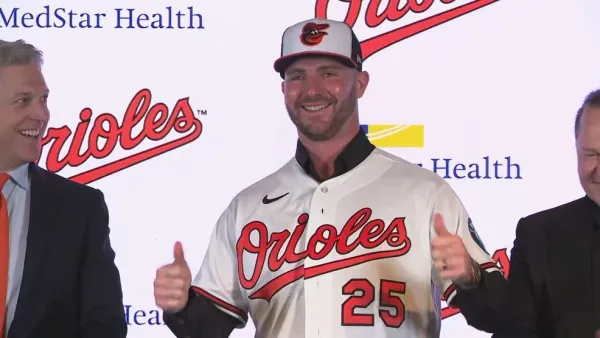
Orioles President of Baseball Operations Mike Elias announced today that Jackson Holliday will miss Opening Day recovering from a hamate injury, while Jordan Westburg will get a late start to camp with a tweaked oblique. This is not devastating news, and it seems as if Westburg may not miss much time, but it does transform the Orioles' infield situation from a logjam to a short-term question.
I am prepared. I stretched. I have meditated. Nothing can hurt me today. Not even Michael Elias.
— Dan Sanchez (@oriolesreview.bsky.social) 2026-02-11T13:34:31.001Z
They could opt to add externally — by reuniting with utility infielder Ramon Urias, for example — but, given the relatively manageable timeline of the injuries, they'll probably look to fill the gaps internally. With Gunnar Henderson cemented at shortstop, here's a look at the internal candidates to hold down second and third with Holliday and Westburg out for a bit. Let me know what you think about these options in the comments.
Blaze Alexander
ZiPS: .237/.322/.369; 95 wRC+; +8.7 DEF; 2.1 WAR in 459 PA
OOPSY: .228/.311/.371; 94 wRC+; +2.3 DEF; 1.0 WAR in 294 PA
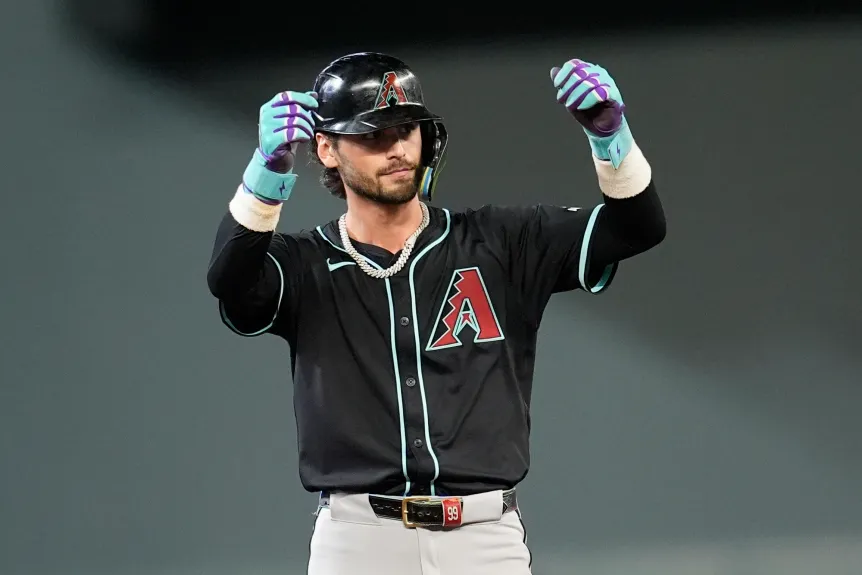
The Orioles made a somewhat perplexing trade last week, subtracting from a weakness and adding to a surplus by shipping out optionable RP Kade Strowd and two prospects — 21-year-old RHP Wellington Aracena and 20-year-old INF José Mejía — to Arizona for Blaze Alexander, a 26-year-old super utility man coming off a solid half-season with the Diamondbacks. I won't get into trade grades here (happy to in the comments), but after some initial confusion I see the logic. In a stroke of luck, this trade was completed one day before Holliday broke his hamate bone.
Alexander's biggest strengths are his athleticism and versatility. With 85th percentile sprint speed, a double-plus arm and generally strong defensive instincts, Blaze brings a speed/defense combo that gives him a useful floor off the bench. While he played quite a bit of shortstop coming up through the D-Backs' system, he's transitioned to more time at 3B and 2B. His numbers in a brief ML sample at shortstop are not good — -8 OAA and -6 DRS in just 138 innings — but with Henderson playing just about every day, he wouldn't be too stretched in a pinch.
He rated a much more favorable +3 OAA and +4 DRS at 2B and 0 OAA and +1 DRS in small samples at 3B. He improved his value by getting a little time in CF and LF without embarrassing himself, even making a highlight-worthy play to rob a home run in left in his debut there. Given the Orioles' current situation, he'd likely get most of his time in the infield.
While there are significant questions about his bat, specifically a below average hit tool that led to a 32.2% strikeout rate and 31% whiff rate last year, he walks at an average rate and has the potential for average power, maybe better against lefties. In fact, he projects to do the vast majority of his damage against left-handed pitching, with a career .269/.365/.434 line and 125 wRC+ vs. lefties vs. .219/.296/.327 and 77 wRC+ against righties. Overall, he projects as a slightly below average bat with the dial turned one way or another based on how strictly he is platooned.
While that platoon split limits his ceiling as a regular, it does make him a very valuable half-time player if deployed strategically. Alexander was already making the roster, and he now looks to play an important role while Holliday is out. The Orioles will likely live with the weak bat vs. RHP in exchange for stabilizing the defense. His best fit is probably 2B, but he is a good 3B as well.
Coby Mayo
ZiPS: .234/.310/.443; 110 wRC+; -5.7 DEF; 1.8 WAR in 520 PA
OOPSY: .243/.318/.442; 112 wRC+, -0.2 DEF; 0.1 WAR in 28 PA
Surprise! Here we go again. Coby Mayo, who struggled mightily in the field and at the plate through most of his time in the big leagues last year before finding his swing and settling in at first base in September, is still here. Even after the Orioles signed Pete Alonso, leading to weeks of trade speculation, Mayo is still here. Even after the Orioles settled on a contract with Ryan Mountcastle, Mayo is still here. Even with Samuel Basallo looking to get some playing time at 1B, Mayo is still here.
So where the hell is he going to play? Until the most recent injury news, I thought he might have been ticketed to AAA Norfolk to learn how to play RF. He might still, but these injuries open up an interesting opportunity. There should be plenty of playing time available in camp, with Gunnar at the World Baseball Classic and Westburg and Holliday out. Can Mayo look acceptable at third base this spring? He hasn't so far, but he doesn't need to be a wizard there. Just competent enough to split time with a glove-first option.
Mayo clearly has the highest offensive potential of any internal option. A former Top-100 prospect with plus bat speed and double-plus power, Mayo's propensity for whiffs got the best of him in the big leagues, and combined with somewhat sporadic playing time, his entire offensive approach fell apart. But he appeared to figure it out in September, hitting .301/.393/.548 with a 165 wRC+. If he hits anywhere close to that number in the spring, the Orioles will take every opportunity to find him at bats, and an early opening at 3B might be his best bet, even if it's not his long-term destination.
Jeremiah Jackson
ZiPS: .242/.282/.416; 93 wRC+; +3.3 DEF; 1.6 WAR in 514 PA
OOPSY: .239/.278/.410; 90 wRC+; -0.5 DEF; 0.4 WAR in 203 PA
Jackson, 25, turned heads with his offensive production after getting the call in August. Unfortunately, despite strong exit velocities, there wasn't much else in the underlying data to support it, and pitchers adjusted. His wOBA dropped from .355 in August to .314 in September, and his overall solid .336 wOBA far exceeded his .295 xwOBA.
There are three connected culprits here: despite solid bat speed and hard contact, Jackson whiffs too much, is too aggressive and doesn't pull the ball in the air enough to make the most of his hard-hit balls in play.
Strikeouts have always been an issue for Jackson, but he turned things around over the last two years with an ultra-aggressive approach. The thought was simple: the more aggressive he was early in the count, the more likely he'd be to put the ball in play before striking out, and given his propensity for hard contact it was worth the tradeoff in walk rate.
Unfortunately, the plan faltered against better pitching in the big leagues. His K-rate more than doubled from AAA to MLB, and while he was still able to hit the ball hard, his well-below average 10% pull AIR% limited his damage on contact. Ultimately his .276/.328/.447 line was bolstered by an unsustainable .365 BABIP, and his 30.2% whiff rate against 4-seam fastballs suggests a potentially fatal flaw. If he can't fix these issues, he'll have trouble maintaining a .300 OBP going forward.
I don't mean to sound too down on Jackson. He still has the kind of bat speed and exit velocity that is hard to teach. If he can find a more balanced approach and tweak the swing a bit, he can be a productive bat. He's a natural infielder who was stretched in RF for most of his time with the Orioles. He doesn't project as above average anywhere, but if he can handle 3B in camp there's a little bit of upside here. The risk is that his OBP collapses and his glove is below average, which doesn't add much to the roster. He'll be interesting to watch in camp.
Luis Vázquez
ZiPS: .236/.292/.367; 85 wRC+; +6.8 DEF; 1.2 WAR in 371 PA
OOPSY: .234/.291/.368; 85 wRC+; 0.0 DEF; 0.0 WAR in 1 PA
Vázquez, 26, hit well enough in AAA Norfolk last year (106 wRC+) to get called up during the Orioles' injury-plagued season. He proceeded to bounce around the infield while giving the Orioles absolutely nothing in 53 PA over 36 games. Vázquez, a true shortstop with more than enough arm and range to handle 3B and 2B, will never be known for his bat, but he was a true black hole last year at .160/.208/.240.
The Orioles tendered Vázquez a contract anyway, only to DFA him a few weeks later. He cleared waivers and was outrighted to Triple-A for depth, which is now being tested. As a non-roster invite, Vázquez is further behind the depth chart than the above options, but as a defensive specialist he could make some sense to pair at 3B with a bat-first option like Mayo or Jackson.
Payton Eeles
ZiPS: .236/.329/.314; 88 wRC+; -4.0 DEF; 0.5 WAR in 445 PA
OOPSY: .230/.323/.335; 90 wRC+; 0.0 DEF; 0.o WAR in 1 PA
The Orioles acquired Eeles in a somewhat surprising deal that sent catcher Alex Jackson to the Twins just ahead of the deadline to set 40-man rosters and protect eligible players from the Rule V draft. Like Vázquez, Eeles is a non-roster invite in camp. According to Baseball America, he profiles as an above average second baseman who should be playable at third despite an average arm.
An undersized infielder out of Coastal Carolina, Eeles didn't enter pro ball until 24. He has well below average raw power and scouts are torn on his offensive potential, but he has shot up the minor league ladder in two years, demonstrating a patient approach and a knack for solid contact, using the gaps well. He took a small step backward at AAA last year after recovering from knee surgery, but despite a relatively small track record his on base skills and competence on the dirt give him the chance to stick in some kind of major league role. Whether he's ready for that now remains to be seen.
There's reason for optimism. Mike Elias said Westburg's status for Opening Day should not be in jeopardy. Fransisco Lindor, who is also having surgery to fix a broken hamate bone, is only expected to miss 6-8 weeks. That timeline could see Holliday back in the big leagues by late April after a rehab assignment.
But oblique and hamate injuries both have a tendency to nag. The Orioles will need to use their infield depth to avoid issues early in the season. What do you think about these options?